
New York City is gradually changing its urban landscape in terms of ecology, infrastructure, and digital equity. And the Bronx, as the borough facing the most issues in all these sectors, is, unsurprisingly, involved in the majority of “Smart City” projects. Find out which ones in more detail on bronx-future.com.
Digital Equity
Internet was once a luxury. Today, it’s like water or electricity: without it, you can’t find a job, book a doctor’s appointment, or help your child with homework. But what do you do if you can’t afford it?
New York City’s answer to this question is simple: the internet should be available to everyone. And now, thanks to the new city program Liberty Link, hundreds of families in Upper Manhattan and the Bronx will get it right in their homes—with no monthly bills and with tech support if something isn’t working.
Liberty Link is a three-year pilot program that will cover 35 affordable housing buildings—that is, where people live with Section 8 subsidies or other forms of social support. In total, that’s over 2,200 households. The city government has allocated $3.25 million in federal funds to transform Wi-Fi from a luxury into a basic service, bringing it directly into apartments, not just libraries or parks.
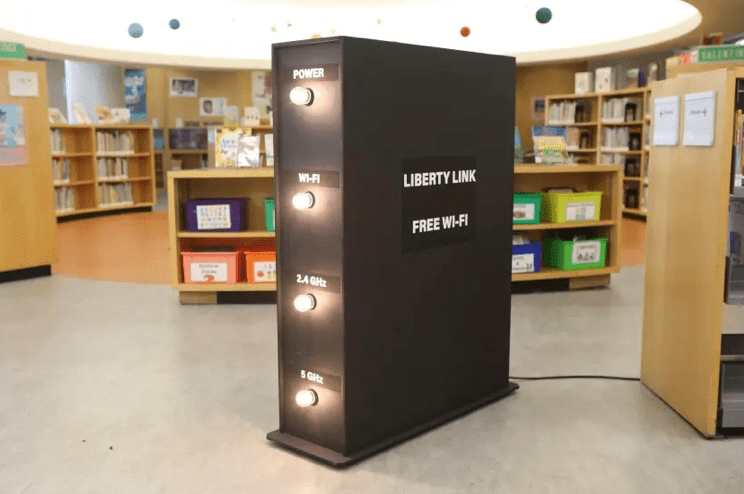
But that’s not all. As part of the program, people also get access to Neighborhood Tech Help—technical support from libraries, volunteers, and digital navigators who help with everything from setting up a router to creating an email account or filling out an online application for social assistance.
Liberty Link isn’t starting from scratch. It’s a logical continuation of the Big Apple Connect initiative, which has already connected over 330,000 residents in NYCHA housing complexes to the internet.
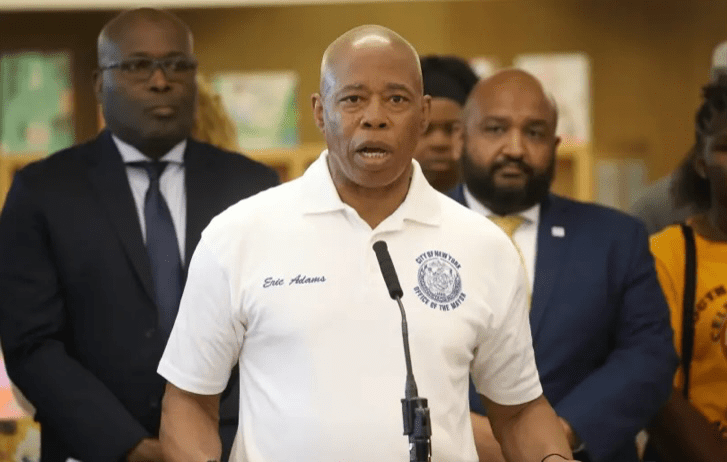
Alongside the launch of Liberty Link, Mayor Eric Adams and the city’s Chief Technology Officer, Matthew Fraser, presented the “NYC Digital Equity Roadmap”—a major action plan to close the digital gap in the city’s five boroughs, especially in the Bronx.
Among the new initiatives are:
- $2.4 million in investments for computer labs in libraries, senior centers, and youth centers.
- Expanding the fleet of mobile computer vans that travel around neighborhoods, allowing residents to connect, print resumes, and use email services.
- Distributing refurbished computers and mobile devices through community organizations.
- Creating the position of Chief Digital Equity Officer—a person who will coordinate all digital inclusion initiatives.
- Launching an inter-agency Digital Equity Task Force to ensure all city agencies work in a coordinated manner.
“In the 21st century, this isn’t a question of technology,” Mayor Adams says. “It’s a question of justice. If you don’t have internet, you don’t have a voice, an education, access to healthcare, or government services. We cannot allow that to happen.”
Infrastructure
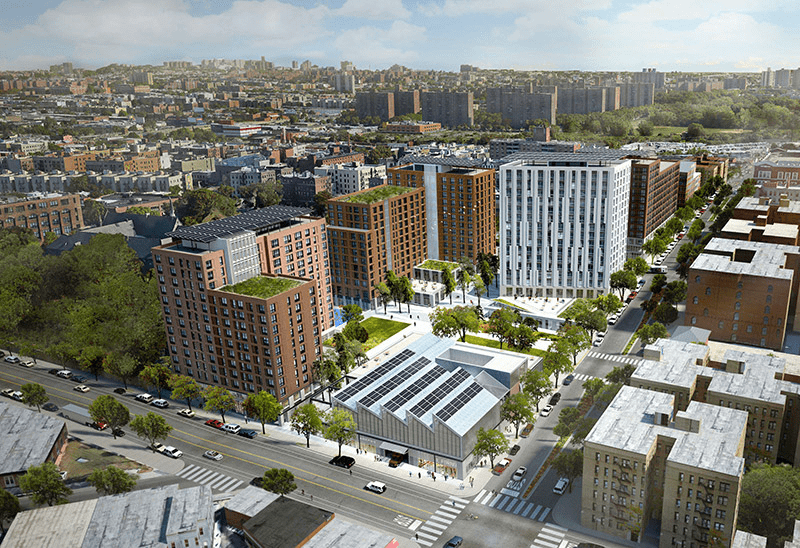
In the Bronx, a borough that has struggled for decades with traffic jams, noise, and unhealthy air, long-awaited changes are finally happening. It all started with the project to improve access to Hunts Point—a hub for billions of dollars in logistics and food commerce. Every day, over 78,000 vehicles pass through the area, with 13,000 being trucks heading to the massive Hunts Point Market. This creates pollution and a high rate of asthma among local residents.
The government decided to change this. A large-scale infrastructure reconstruction project, costing $1.7 billion, was launched. Sections of the Bruckner Expressway were renovated, new exits were created, and a new route for trucks was built so they no longer have to use narrow local streets. Pedestrians and cyclists now have safe routes that connect the neighborhood to a green area along the Bronx River.
Simultaneously with the road construction, Governor Kathy Hochul announced another initiative—$10 millionfor the development of clean transportation in the Bronx. This means:
- electric school buses;
- charging stations beneath the expressway;
- fast charging for electric vehicles;
- new options for affordable electric transportation for residents.
These changes are already impacting the quality of life: less noise, cleaner air, more green spaces, and safe access to waterways. Renovated parks, street landscaping, and security cameras on bike paths—all of this isn’t just infrastructure; it’s care.
The transformation of Harrison Park should also be noted. It’s no longer just a green space but a modern public area with paths, recreational zones, observation decks over the Bronx River, safe crossings over the railroad, and quality lighting. Even under the expressway overpasses, space was found for convenient routes for pedestrians and cyclists. And within the project, over 15,000 square feet of new public space was created—the “Bronx River Open Space.” The project received broad support. As Congressman Ritchie Torres noted:
“Those who have suffered the most should benefit the most.”
The Green Economy
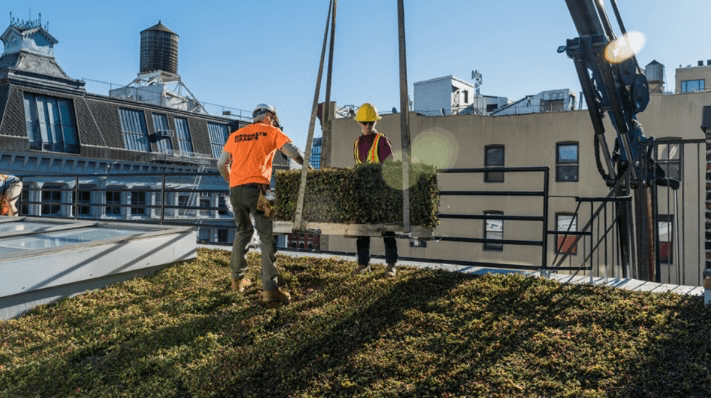
New York City is serious about this. It’s confidently choosing a path toward a “green” future where the environment, justice, and the economy move in the same direction. The government has set ambitious goals:
- 70% of electricity from renewable sources by 2030;
- full carbon neutrality by mid-century;
- electric vehicles replacing gasoline ones on all roads by 2035.
And at the center of this transition are the people. Especially those who have been historically left behind: communities that have suffered from industrial pollution, chronic poverty, poor air quality, and noise. For them, New York has earmarked at least 35%, and the goal is 40%, of all the benefits from clean energy.
Significant money is already being invested:
- over $35 billion in renewable energy projects statewide;
- $6.8 billion for energy-efficient buildings;
- $3.3 billion for solar energy;
- $1 billion for the development of clean transportation;
- $2 billion through the NY Green Bank to support new initiatives.
These investments aren’t just for wind turbines or solar panels. They’re for over 165,000 jobs. New York already has 400 climate-smart communities, nearly 500 clean energy communities, and the largest air monitoring system in the state in 10 of its most vulnerable neighborhoods.
But all of this transformation takes on a special meaning when you get down to the level of blocks and streets. For example, in the South Bronx.
“We are improving the lives of New Yorkers by reducing air pollution, noise, and traffic congestion,” said Governor Kathy Hochul. “And we are doing it fairly—by investing specifically in the communities that need it the most.”
“Smart City” Pilot Programs
New York City is becoming a testing ground for clean technologies. In the heart of the metropolis, any public space can now become a place for a technological experiment. The goal is simple but ambitious: to use innovation to improve the work of over 55 city agencies, increase the efficiency of services, reduce the digital divide, and improve the quality of life for New Yorkers.
The city is paying special attention to reducing greenhouse gas emissions in the construction sector—one of the most polluting industries. In response to this problem, New York initiated the creation of the North American Electrification of Construction Coalition (NAECC) in September 2024. It includes six cities and counties, as well as a dozen private and non-profit partners who have collectively committed to using electric construction equipment in their projects.
To move from words to action, the city has announced a pilot program aimed at testing the capabilities of electric machinery—from mini-loaders to concrete mixers, from solar-powered light towers to telescopic lifts. Partners are being sought from companies willing to provide their equipment, including charging solutions, for the city’s free use for 2-6 months.
During these trials, city agencies will carefully evaluate each piece of equipment based on criteria such as:
- battery power and endurance in real-world weather conditions;
- efficiency compared to conventional internal combustion engine equipment;
- user-friendliness for workers, ease of training, and satisfaction levels;
- practicality: charging time, cost, and changes in the work process;
- additional benefits: reduced noise and improved air quality.
Any manufacturer or supplier of electric construction equipment can apply. The city is open to collaborating with those who are ready to offer solutions that not only work but also change the rules of the game in the construction industry.
The most promising technologies will be showcased during Climate Week.
For the selected participants, this program will not only be a chance to test their equipment in a major metropolis but also an opportunity to gain national recognition. Their products will be featured in official case studies published on the platforms of city agencies—such as the Mayor’s Office of Climate and Environmental Justice and the “Smart City” platform.
All these projects are an example of how a city can change when the government invests in the health, safety, and future of its citizens. And while there’s still a lot of work ahead, the Bronx already feels that a new era is on the horizon.

