

The Third Avenue Railway was once a vital part of the Bronx’s transportation system and had a major influence on the borough’s development from the late 19th century to the mid-20th century. In this article on bronx-future.com, we’ll tell you about the history of the trolley service between Manhattan and the Bronx, as well as the reasons why this mode of transportation disappeared from the streets of New York.
The First Streetcars
The first horse-drawn omnibus appeared in New York City in 1832. After a while, special rails were built for horse-drawn wagons. But after the Civil War, the small network of horse-drawn wagons couldn’t keep up with the needs of the growing population, which was approaching one million. Servicing the horses and wagons was too difficult and expensive. City leaders looked for new means of transportation that wouldn’t clog the crowded streets and could carry a large number of people every day.
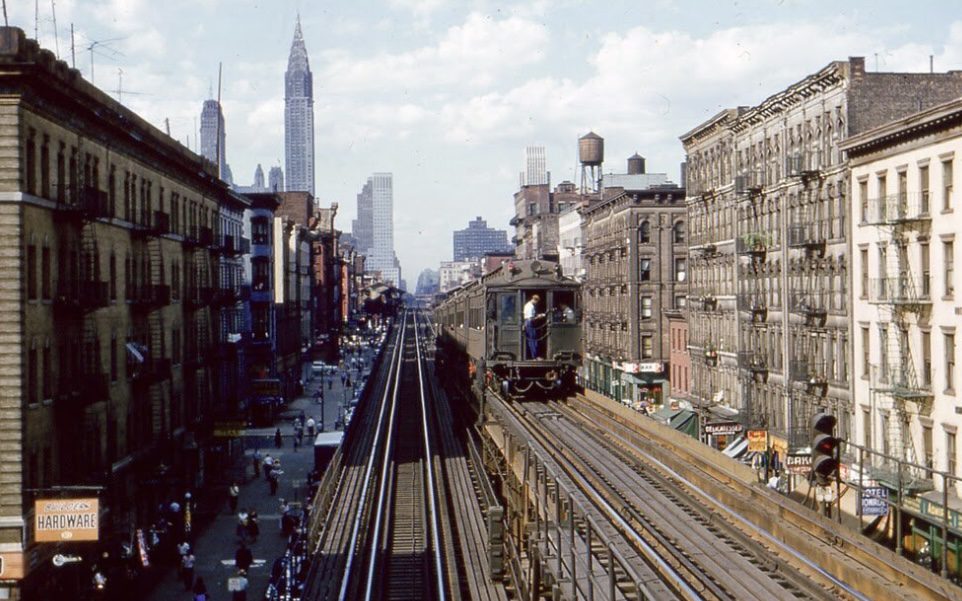
It was decided to follow the example of the British. In London, the first railroad opened in 1863. New York City’s elevated railway system began to develop with an experimental line in 1867. By 1876, one route ran from Battery Park to 59th Street, with steam-powered trains covering the distance in 30 minutes. This was much faster and more convenient than horse-drawn transportation. In its first year, the line served over two million passengers.
The next route, built by the New York Elevated Railroad Company in 1878, was a line from Third Avenue to 129th Street on the Harlem River.
New railway companies began to appear. In 1879, the Gilbert Elevated Company opened a line from Sixth Avenue to 58th Street and completed the connection to the Ninth Avenue line. In 1879, the companies merged to form the Manhattan Railway Company. By 1880, there were already four elevated lines stretching to the Harlem River.
The system became especially popular after a fixed five-cent fare was introduced on October 1, 1886: over three million passengers were carried in the first week of November of that year. At the same time, the Third Avenue line was extended north into the Bronx, which contributed to an increase in the borough’s population. Over the next two decades, the Bronx’s population grew nearly fivefold, mainly along the Third Avenue corridor.
In 1900, the Rapid Transit Construction Company began building an electric subway line. In 1903, a year before the first subway line opened, the Interborough Rapid Transit company gained a monopoly on rapid transit, leasing the Manhattan Railway Company’s assets for 999 years.
Population growth due to immigration continued. The elevated system adapted to this growth by introducing longer trains and new express services, and also by expanding into Queens in 1917 via the 59th Street Bridge. By 1920, the number of passengers on the Manhattan Elevated lines had reached a record high.
The Gradual Disappearance of Streetcars from the Streets of NYC
However, after 1920, the elevated system began to shrink, and many short branches were closed. Economic changes and the new needs of society forced politicians to close the elevated lines and replace them with subways, which continued to develop.
In the 1930s, the Great Depression and political changes in New York City and State led to the decline of the Manhattan Elevated system. In December 1938, the Sixth Avenue line was closed, and by April 1939, it was completely dismantled. A new subway line opened in its place in December 1940.
In June 1940, the elevated Ninth Avenue line south of 155th Street and the Second Avenue line north of 59th Street were closed and demolished in 1941. The rest of the Second Avenue line was abandoned in 1942. By the end of World War II, only the Third Avenue line, which connected Manhattan and the Bronx, remained.
After 1949, public transport ridership across the country began to decline as people increasingly chose cars. In New York, this process was not as sharp, but still noticeable. The city also reduced rapid transit on the East Side. In April 1952, the city’s transit authority suspended service on Third Avenue in the evenings and on weekends. In early 1954, the New York City Transit Authority decided that the Third Avenue line was no longer necessary, as buses and the subway could meet the needs of all passengers.
The Last Ride in the Bronx
Although some activists continued to fight to save New York’s iconic transportation, all attempts were unsuccessful. On Thursday, May 12, 1955, at around 6 p.m., the last streetcar departed from the Chatham Square terminal, located north of City Hall. 600 passengers took the final streetcar ride. As one Bronx resident who was there recalled, “A police officer walked through the six cars and cut the emergency brake cords so no one could stop the train. When the train moved north, people came out of bars and stores, holding drinks, and said goodbye to the streetcar.”
In August 1955, demolition work began on the equipment: first the stations were dismantled, then the spans and supports. Finally, the pillars were pulled from their foundations. Some of the scrap metal was used to build the third tube of the Lincoln Tunnel between Manhattan and New Jersey. By February 1956, the demolition was complete.
In the summer of 1955, the NYCTA began destroying the rolling stock. In an open area near the Bronx River and 174th Street, the cars were doused with fuel and burned. But they didn’t burn well, and the contractor had to pile garbage on the cars to get the flames going.
Almost all of the rolling stock on Third Avenue was destroyed. The 1878 iron parts, stained glass, and other decorations were not preserved. Only a few relics ended up in the collections of antique enthusiasts.
The Story of One Third Avenue Railway Streetcar
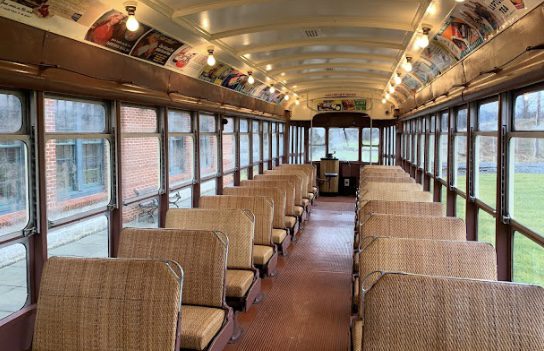
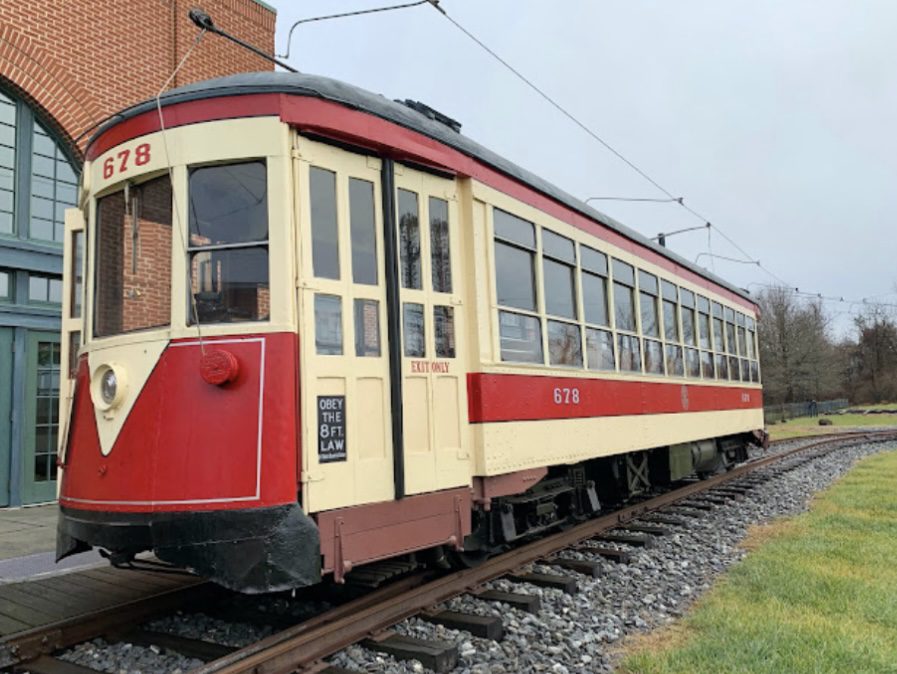
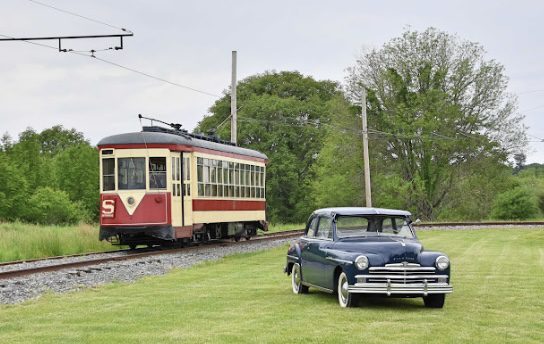
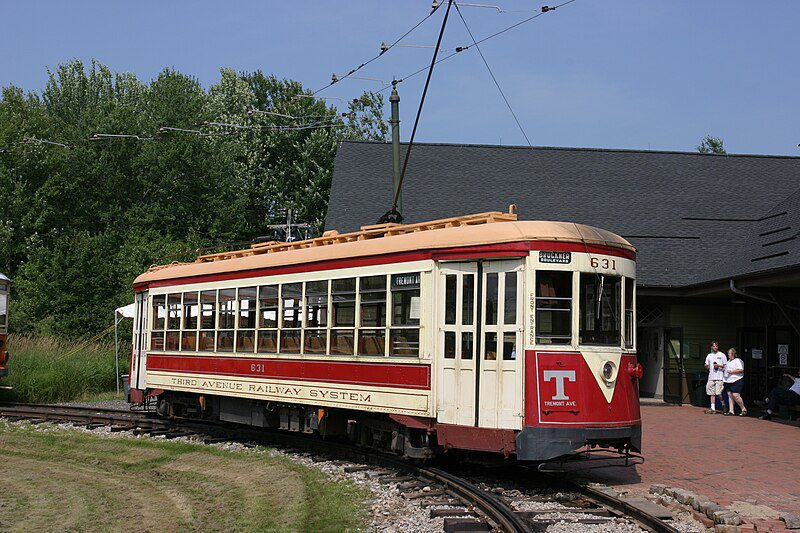
But not all Third Avenue Railway streetcars were destroyed in the fire. Some were lucky enough to travel the streets of Vienna for a while longer. After the war, thanks to funding from the Marshall Plan, Austria purchased 40 Third Avenue Railway cars, including car No. 631. Vienna converted these cars, installing pantographs, and changed the number from 631 to 4216. The car got a new red-and-white paint job instead of the traditional New York combination of red and cream. The American cars were used on single-track suburban routes because their width did not allow them to operate on double-track city lines. The Third Avenue Railway cars ran in Austria from 1949 to 1969.
After 1970, most of the cars were dismantled for scrap metal, with only 14 examples left in storage for sale. In 1972, the American company Seashore purchased car No. 4216, but couldn’t raise the $15,000 to transport it to the U.S., so the car remained in storage in Vienna.
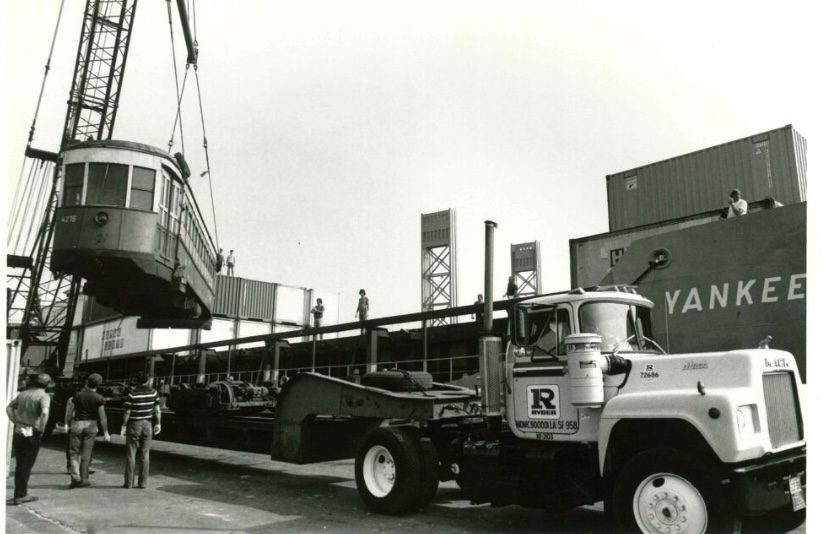
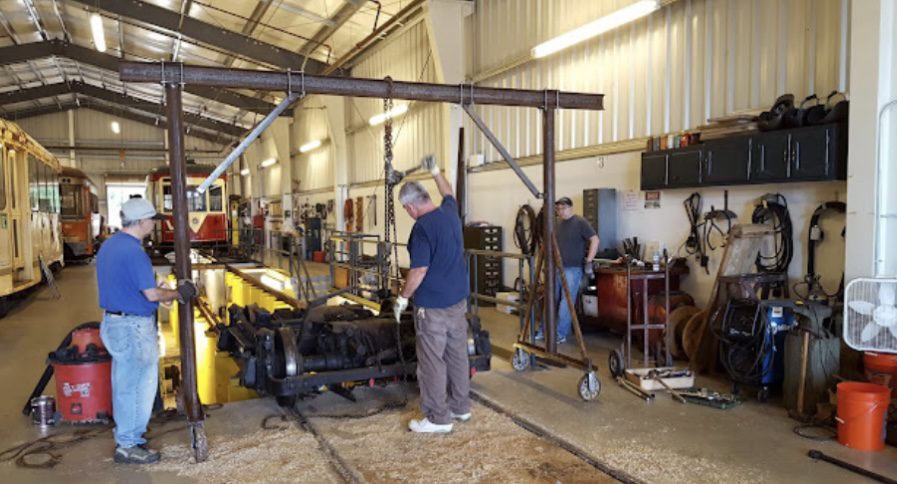
In 1981, the car was finally transported to the U.S. In 1983, Seashore began restoring the streetcar to its original New York appearance. But it was not possible to run the vintage car on the route even after major restoration, as the track width in Vienna was 5/16 of an inch wider than Seashore’s standard gauge. It wasn’t until 1995 that all the size discrepancies were fixed, and the legendary car was put into service in New York. It ran for a few years but couldn’t withstand the stress. Now car No. 4216 is in storage and needs mechanical and cosmetic repairs.
The Third Avenue Railway left behind an important legacy that is still felt today. Its former streetcar lines became the basis for the Bronx’s modern transportation system, including bus routes and the subway.
Many streets and places in the Bronx have names related to the Third Avenue Railway, such as the Third Avenue Bridge and the Third Avenue El.