

If you find yourself in Morrisania, a Latinx neighborhood in the Bronx, you might think this building is a museum or a community center. But this colorful, vibrant residence is actually an affordable housing project for low-income residents. In this article on bronx-future.com, we’ll explore its history and design features.
Background of the Construction
The demographic situation in the Bronx has never been stable. At times, it was flooded with immigrants, while at other times, residents fled in search of a better life in other New York boroughs and U.S. states. There were periods when large families were squeezed into small apartments, and other times when entire neighborhoods were left devastated by fires and residents leaving because of excessively high rents.
In 2022, the Bronx found itself in another demographic crisis. At the time, the borough had the second-highest number of eviction filings among all New York City boroughs. In 2022, 9.2% of tenants faced eviction notices. The cause was once again exorbitant rent, which vulnerable, low-income populations couldn’t afford. About 34% of Bronx residents face serious difficulties with rent, spending more than 50% of their income on housing.
One way to solve this problem is through affordable housing programs. Few investors are willing to put money into this sector, as it doesn’t generate profits. Therefore, it has to be the government’s responsibility. One such affordable housing initiative is the city council’s “City of Yes for Housing Opportunity” project. Its goal is to encourage investment in New York by reducing parking requirements, incentivizing development near transit, and supporting new residential construction.
One neighborhood that required immediate intervention on the housing issue was Morrisania, in the southwest Bronx. This area has always had a predominantly Latinx and African American population. Native Americans make up only 0.2%, and white residents account for only 1.4%. Latinx people are the vast majority, making up almost 60% of the area’s total population. About 31% of Morrisania residents live in poverty, and one in six is unemployed. That’s why this neighborhood was first in line for the affordable housing construction plan.
A New Kind of Affordable Housing Project
The El Borinquen residential complex in Morrisania, built in 2022, demonstrates a successful combination of an important mission and effective development.
Affordable housing is not just physical infrastructure; it’s also a foundation for community development. The opening of such buildings brings numerous economic and social benefits. Successful affordable housing projects make the most of the energy and culture of the local community. In Morrisania, this means combining Puerto Rican culture, which brings together indigenous, Spanish, and African traditions.
Of course, they could have just built another set of tenements, as they did in the Bronx in the 1970s, and washed their hands of the responsibility of providing housing for the poor. But it’s a good thing the city government has moved away from those methods and is approaching the housing problem in low-income neighborhoods with greater care and respect for their residents. In return, the grateful owners of new apartments in a beautiful, large building will likely have more enthusiasm and motivation to improve their neighborhood, and unemployment and crime rates will fall.
Features of El Borinquen Residence
The residential complex project, El Borinquen, was truly implemented with the maximum involvement of all parties. It was as if they weren’t working on affordable housing for immigrants, but were competing for the best creative and ergonomic residential complex. So it’s no surprise that El Borinquen Residence received the “Project of the Year” award from NYSAFAH in 2023. The jury noted how designers and architects implemented the “City of Yes for Housing Opportunity” concept in such an original and non-traditional way.
The new residential complex in Morrisania has become an example of how social programs can be implemented to highlight the vibrant local culture that makes New York unique.
The El Borinquen complex is based on Latin modernism and has become a true focal point amid the monochromatic, standard buildings around it. El Borinquen Residence was designed by Alexander Gorlin Architects.
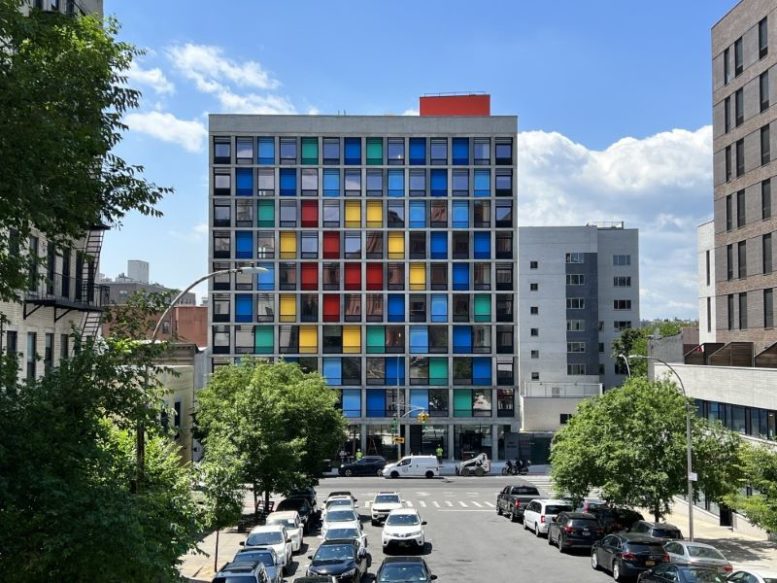
The building has 148 residential units, 90 of which are for formerly homeless individuals with mental health issues and young people aging out of foster care. The other 58 units are reserved for low-income seniors and local residents. The total area is 90,000 square feet, and the building has 10 stories. The building also provides supportive services such as legal counseling, psychiatric care, job readiness training, and financial literacy workshops.
The new residential complex stands out for its vibrant design and well-thought-out architectural concept. The name El Borinquen, which is the indigenous name for Puerto Rico, reflects the area’s predominantly Puerto Rican population. The team successfully implemented a real estate project that provides important resources for the mental, physical, and financial support of all residents, taking into account the needs of the Bronx community.
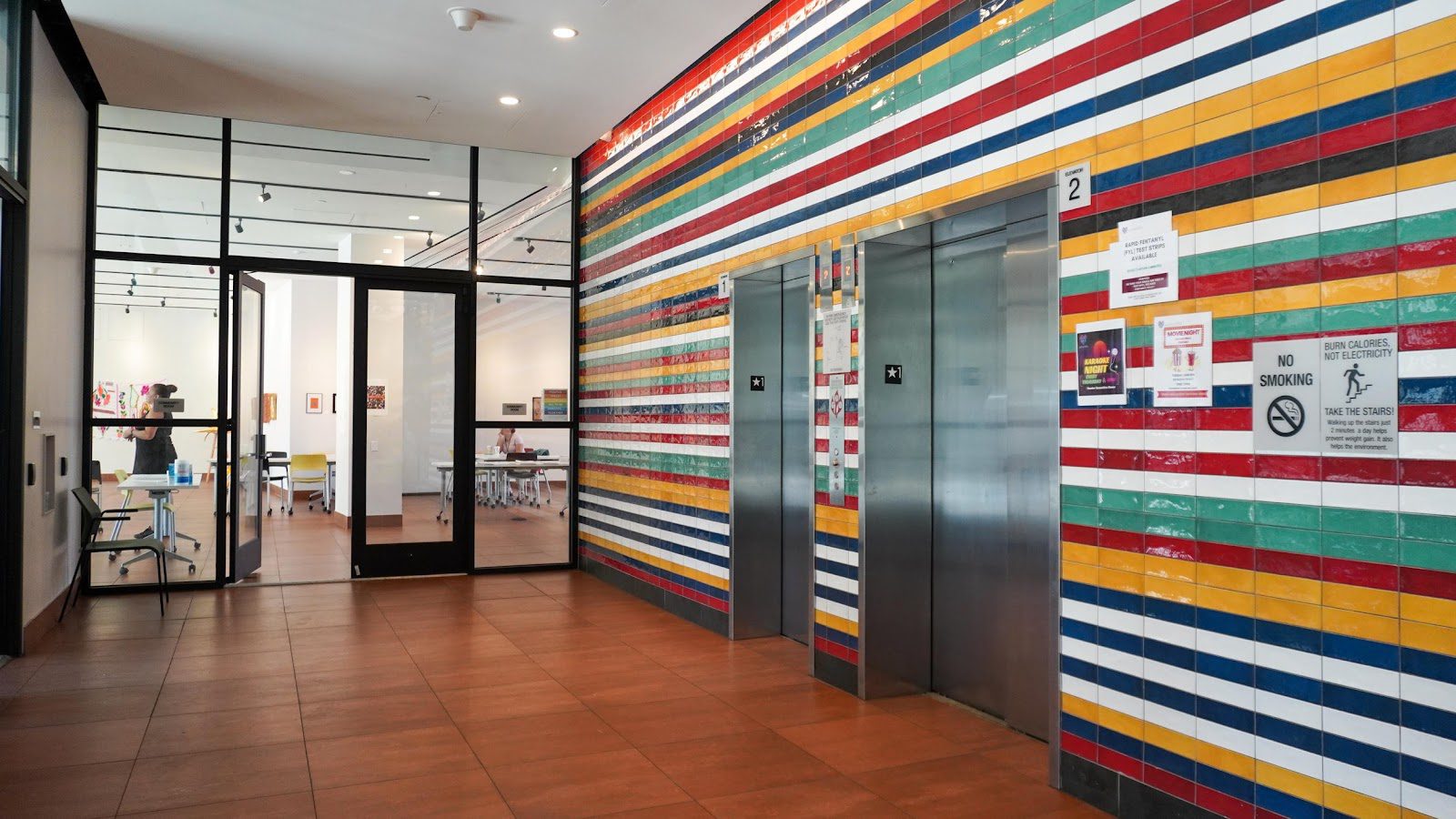
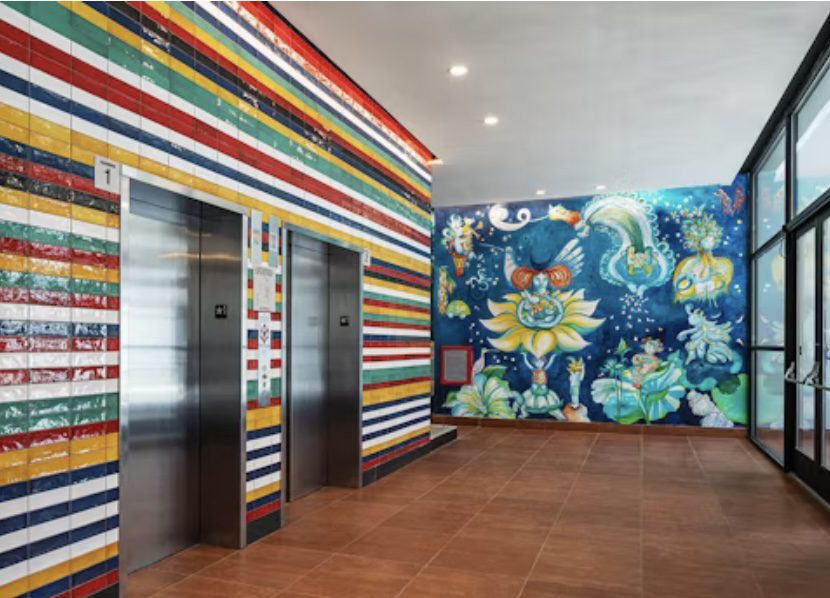
On the ground floor of the building is a floor-to-ceiling mural created by artists Aurelio del Muro and Marta Blair, which is a unique interpretation of “Río Grande de Loiza” by the famous Puerto Rican poet Julia de Burgos.
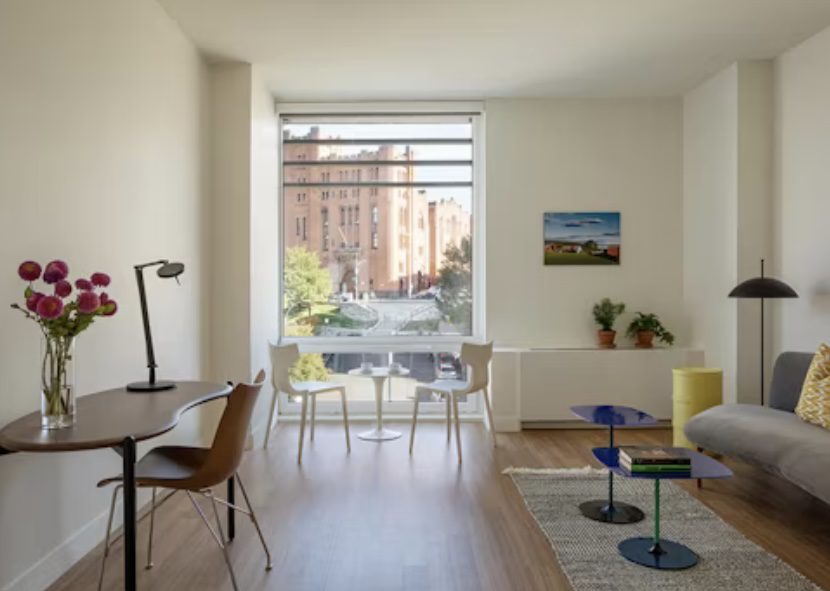
Another feature of this residential complex is the planning of specific community areas. Every element of the building was designed with space for gatherings: two courtyards, a rooftop terrace, spacious lobbies, and a large multi-purpose space intended for an art gallery. The gallery is planned to host periodic exhibitions of works by local artists. These shared spaces are designed to maximize communication between residents and guests. Communication and mutual support are often what vulnerable populations lack.
Symbolic Facade
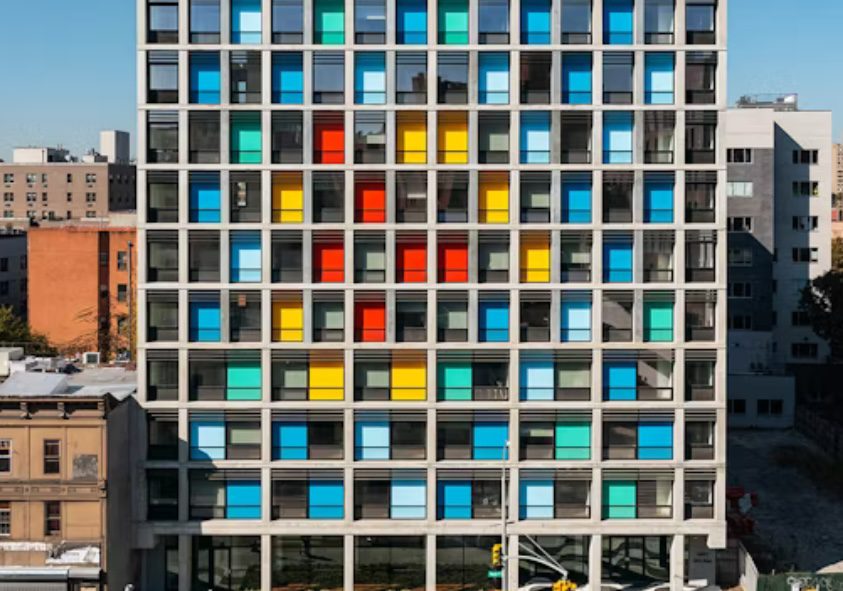
El Borinquen was built with poured concrete, not the blocks or planks typically used in affordable housing projects. This approach was driven by several factors, including site conditions and logistical aspects. Since the lot was 192 feet deep, a standard crane couldn’t reach the far parts of the site. This would have required a large crane, which could have complicated work in the adjacent traffic areas. So, it was decided to use concrete technology. This approach already set the building apart from neighboring structures, but the true calling card of the El Borinquen residential complex became its unique, bright facade, created to reflect the area’s Puerto Rican culture. It aims to emphasize the importance of family, culture, and diversity to the community.
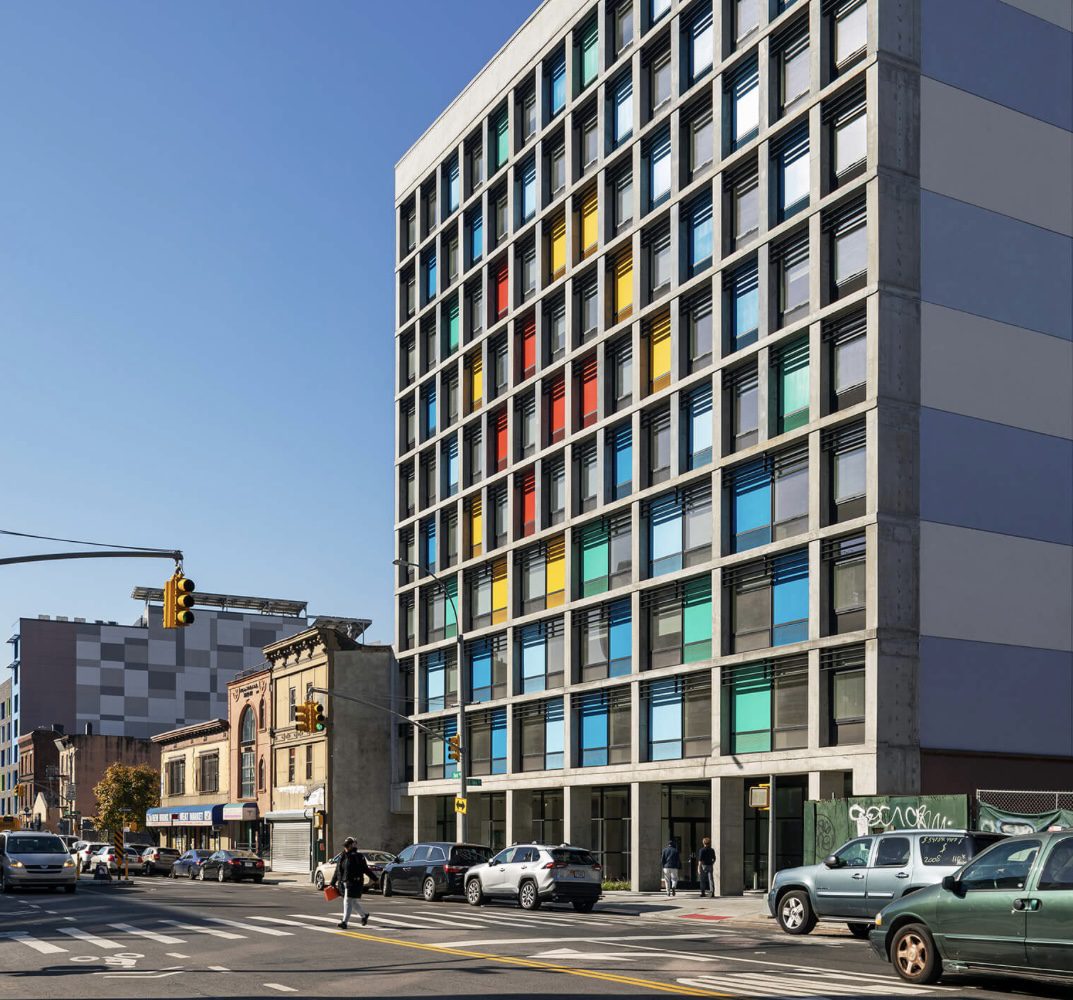
The facade is distinguished by its original style, which draws inspiration in its form and color from the works of Le Corbusier in Brazil and other modernist architectural objects in Latin America. First, the large multicolored heart on the facade reflects the main logo of the company Comunilife, which has been helping to provide vulnerable communities with housing and other needs for over 30 years. Second, all the colors used are related to Latin American cultural heritage and symbolize the main colors of nature: green for leaves, blue for the sky, yellow for the sun, and red for the heart.
El Borinquen stands as an architectural oasis, designed with respect and the integration of the diverse cultural and artistic elements of the Latinx community.