

If you’re interested in the history of 19th-century Bronx, it’s impossible to overlook Fort Schuyler, a preserved fortification of that era. Today, this site is much more than just a stone structure perfect for a selfie backdrop. It houses a historical museum, the Stephen B. Luce Library, the Department of Maritime Transportation, and the administration of the SUNY Maritime College. Learn more about one of the finest examples of early 19th-century fortifications in this article from bronx-future.com.
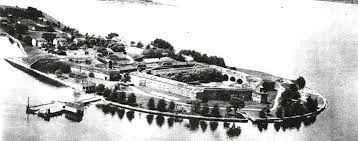
The History of Its Construction
The term “fort” comes from French, meaning “a large enclosed fortification.” However, the French borrowed it from Latin, where it means “strong” or “mighty.” Fort Schuyler was named after Major General Philip Schuyler of the Continental Army. It was built alongside other forts to strengthen the young nation’s eastern coastline under the Third System of Fortifications following the War of 1812 between the U.S. and Britain. Americans deemed their coastal defenses inadequate and began constructing forts, which were considered inexpensive and practical defensive structures at the time.
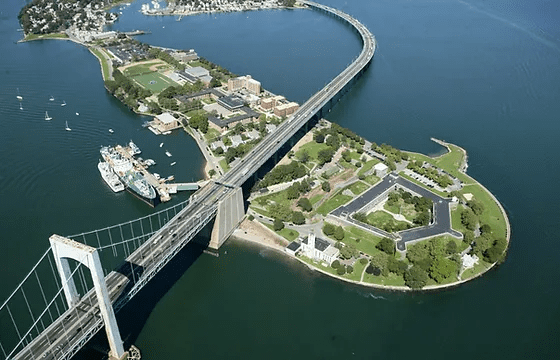
Fort Schuyler played a crucial role in protecting New York City from naval attacks, guarding the eastern approach to the city. It is located on Throggs Neck in the southeastern Bronx, where the East River meets Long Island Sound. Across the river is Fort Totten, constructed during the U.S. Civil War but left incomplete. Together, the two forts could use their artillery to defend New York’s maritime entryway.
Design and Construction
Construction of Fort Schuyler began in 1833 and was completed in 1856, though only 75% of the structure was finished. A garrison was stationed there in 1861. At its peak, Fort Schuyler housed 312 cannons and could accommodate a garrison of 1,250 soldiers. Designed and built by the U.S. Army Corps of Engineers, its location allowed for robust defense of New York City’s eastern waterways.
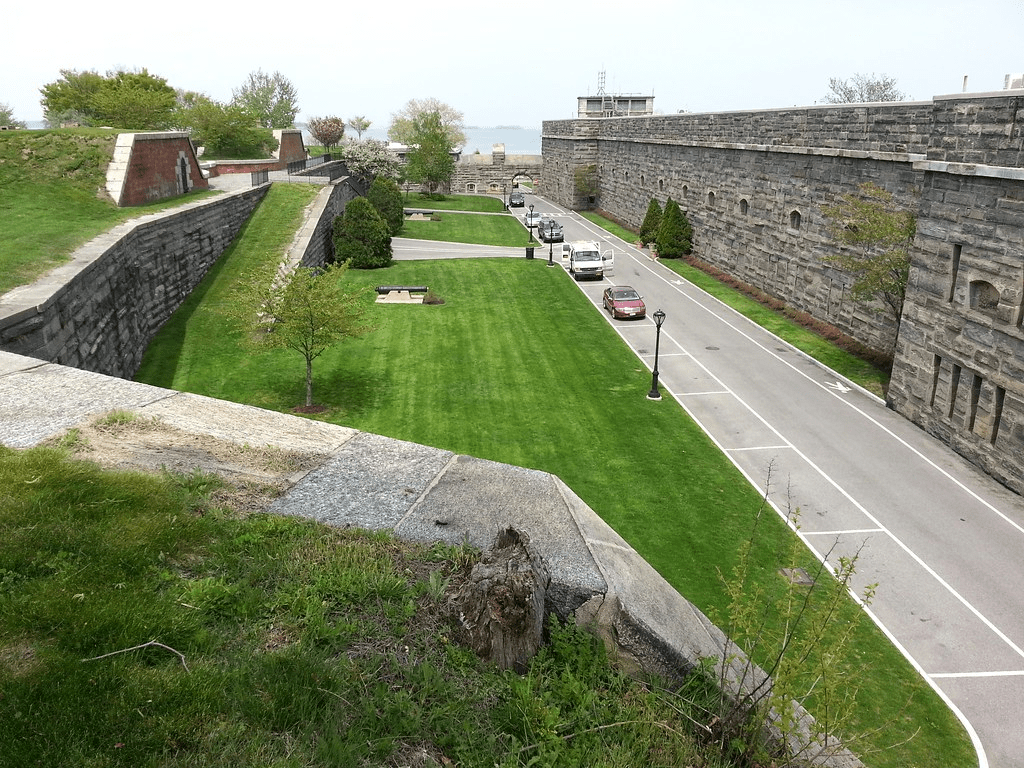
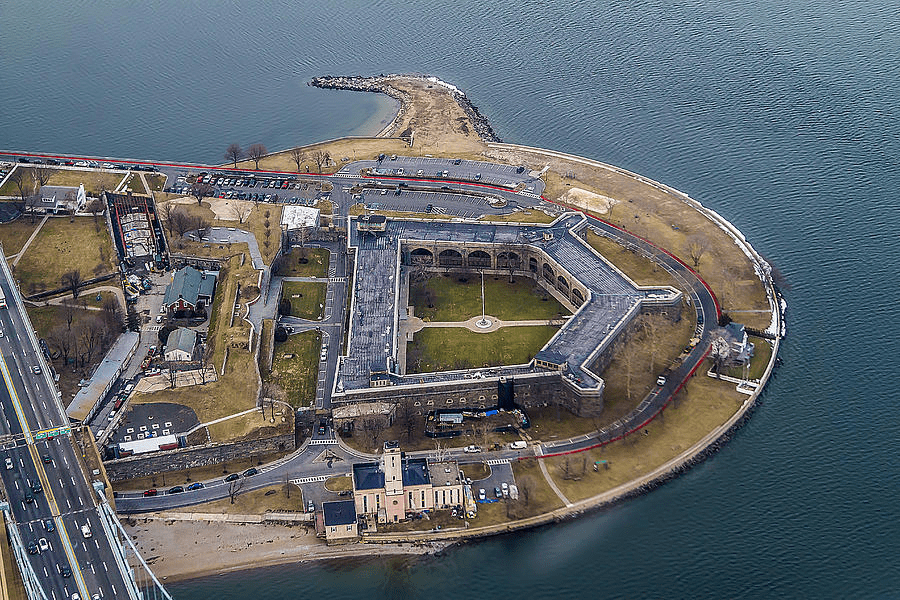
The fort was designed to be defensible on four of its five sides, each side equipped with three tiers of guns. Each tier contained 10 cannons, except the northern side, which held 14. Lower tiers had casemates, while the upper tier featured barbette mounts, offering protection for cannons. Bastion-like fortifications were placed at three corners, developed by U.S. Army engineer Joseph G. Totten. Each bastion included 12 flank howitzers and three heavy coastal guns for additional defense.
At the rear, a hornwork and a forward redoubt (now destroyed) were constructed to defend against land attacks.
The Fort During the U.S. Civil War
By the time the U.S. Civil War began in 1861, Fort Schuyler was operational. Since New York sided with the Union, the fort served as a prison for Confederate soldiers and a hospital. It housed 500 prisoners and operated the McDougall Hospital, which had a capacity of 2,000 beds.
In addition to its roles as a prison and hospital, the fort served as a training and deployment center for new military units. Notable units formed here included the 5th New York Volunteer Infantry Regiment (“Duryee’s Zouaves”) and the 69th and 88th New York Volunteer Infantry Regiments (1st and 2nd regiments of the Irish Brigade). From January 1863 to March 1864, the fort hosted the 20th Independent Battery of New York Volunteer Artillery.
Life at the fort during the war was grueling, with soldiers primarily serving as guards or hospital orderlies rather than engaging in combat.
The Endicott Era
In the decades following the Civil War, the U.S. Army continued to modernize Fort Schuyler. Between 1873 and 1876, a 10-gun battery and a casemate for controlling underwater mines were added. During the Endicott Program, the fort received additional batteries to strengthen coastal defenses, including installations at nearby Fort Totten and Fort Slocum.
Fort Schuyler’s Guns During World War I and Peacetime
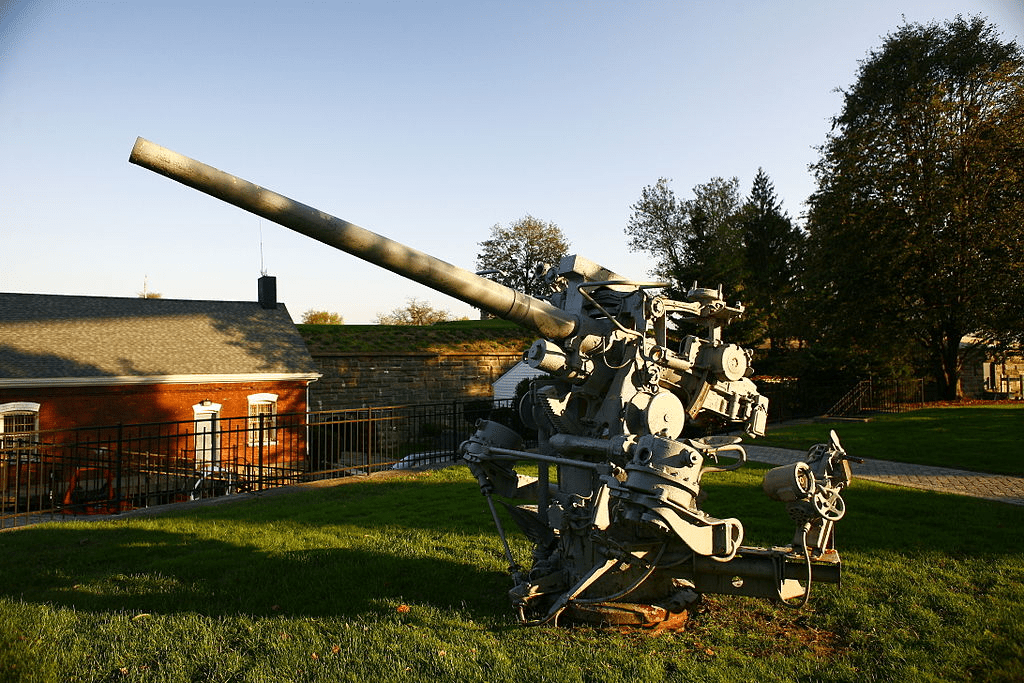
During World War I, the fort’s cannons were sent to France as part of the 69th Artillery Regiment of the Coast Artillery Corps. However, these guns were never used in combat and were eventually scrapped in 1920.
By 1918, concerns about air raids led to the installation of anti-aircraft batteries. However, these were decommissioned by 1920. In the 1930s, the fort ceased to serve as a military site, and all artillery was removed by the 1950s.
Fort Schuyler as an Educational Hub
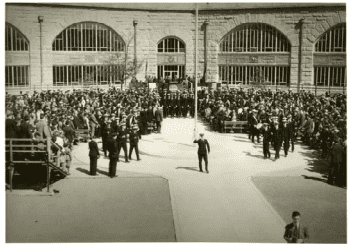
In the late 1920s, the U.S. Army sold the fort to Robert Moses, who planned to develop a state park and establish a base for the New York State Merchant Marine Academy (now SUNY Maritime College). The academy, founded in 1874, began restoring the fort in 1934 to suit its needs. Renovations included building a dock, classrooms, machine shops, a power plant, and converting the fort’s casemates into dormitories.
In 1948, the academy became part of the State University of New York system. In 1976, Fort Schuyler was added to the National Register of Historic Places. In 1986, the site became home to the Maritime Industry Museum, showcasing exhibits on commercial shipping, the Merchant Marine, the Port of New York, and the fort’s history.
Today, Fort Schuyler is an excellent destination for learning and leisure. Visitors from around the world can explore its rich history and educational opportunities.