

The Grand Boulevard, the Bronx’s Park Avenue, the Grand Concourse—these are all names for one of New York City’s most famous streets. It’s home to one of the world’s largest collections of Art Deco apartment buildings and many of the Bronx’s most prominent landmarks. In this article on bronx-future, we’ll tell you about the history of this iconic street and the people who lived there.
Inspired by the Champs-Élysées
In the late 19th century, more and more people began to move to the Bronx, making it one of the fastest-growing areas in the city. But one of the main problems residents faced was the poor quality of the roads. To solve this problem, a new “Department of Street Improvement” was created in 1890.
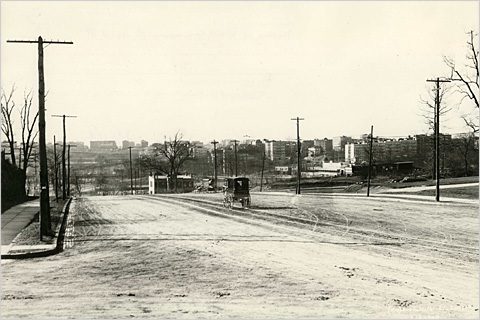
The chief engineer was French immigrant Louis Aloys Risse, who, although he spoke poor English, was always full of ideas and passionately involved everyone in their implementation, earning him the nickname “the Mad Frenchman.” It was he who conceived the Grand Concourse in 1890 as a route connecting Manhattan with the northern Bronx, then known as the “Annexed District.” He envisioned a wide boulevard stretching for miles that could rival the Champs-Élysées. Risse wanted to create more than just a road to get from one end to the other. He wanted it to become a favorite place for residents and visitors to stroll and spend their free time. His plan included a dirt path in the middle of the road for pedestrians and cyclists and a separate area for horse-drawn carriages.
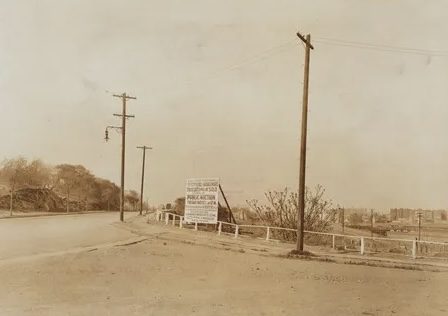
Construction began in 1894 and lasted 15 years, delayed by financial difficulties and corruption. Because transportation had changed since Risse’s initial concept and horse-drawn carriages were no longer relevant, part of the road had to be adapted for automobiles. Finally, in November 1909, the boulevard was opened to traffic, initially between 161st Street and Mosholu Parkway, just south of Van Cortlandt Park. It wasn’t extended to 138th Street until 1927.
Soon after, iconic buildings that are still landmarks today began to appear, such as the Concourse Plaza Hotel in 1923, Yankee Stadium the same year, the Andrew Freedman Home in 1924, Loew’s Paradise Theatre in 1929, and the Bronx County Courthouse in 1933. You can read more about the latter architectural and historical monument in this article.
A Street for the White Elite
The first residents of the buildings on the new central Bronx street were predominantly Jewish and Italian families, as well as middle-class American families with higher education. Many of them were doctors, lawyers, and civil servants. In the 1920s, and especially the 1930s, sophisticated apartment buildings in the popular Art Deco style began to appear on the boulevard and adjacent streets. Living on the Grand Concourse was a mark of prestige.
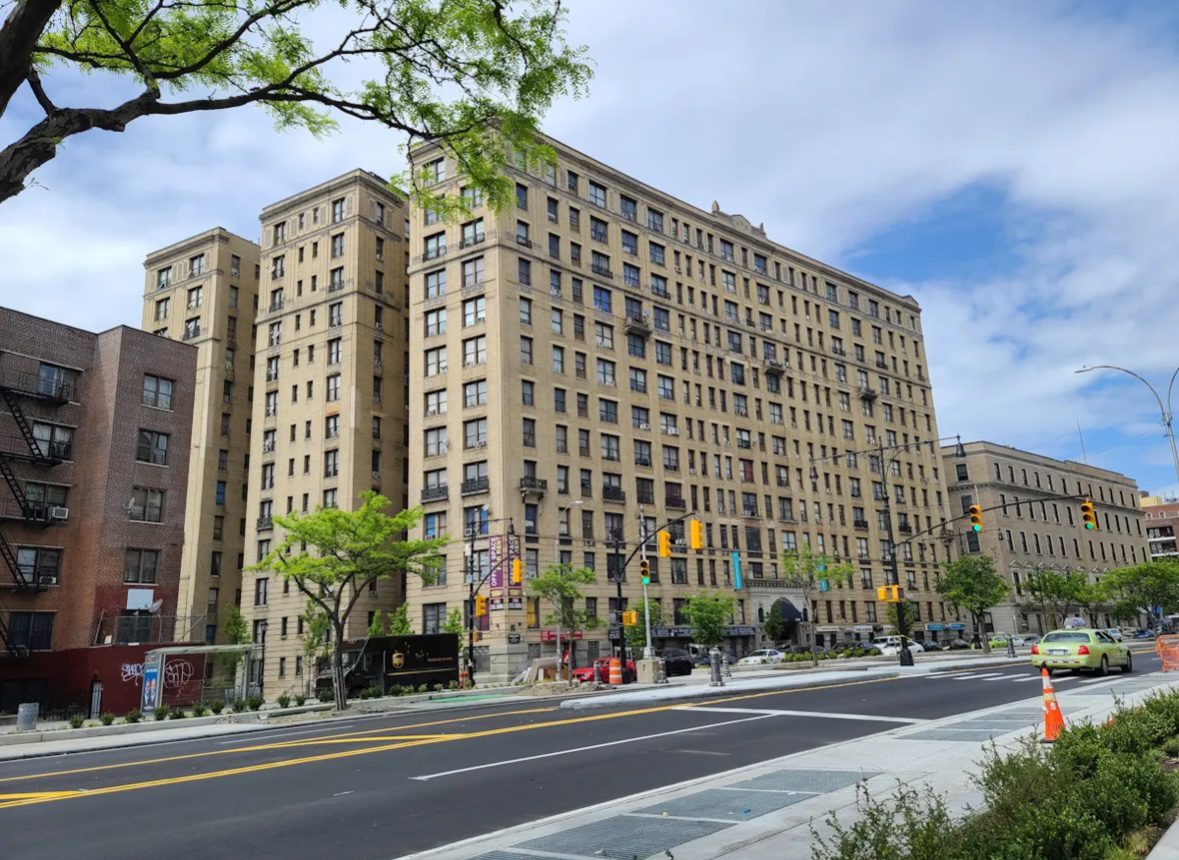
In the 1920s, the Bronx, which earned the title of a “wonder borough,” became the fastest-growing area in New York, welcoming half a million new residents. The majority of newcomers at the time were Jewish, and within a few decades, the Grand Concourse and its surroundings became one of the five largest Jewish communities in the city.
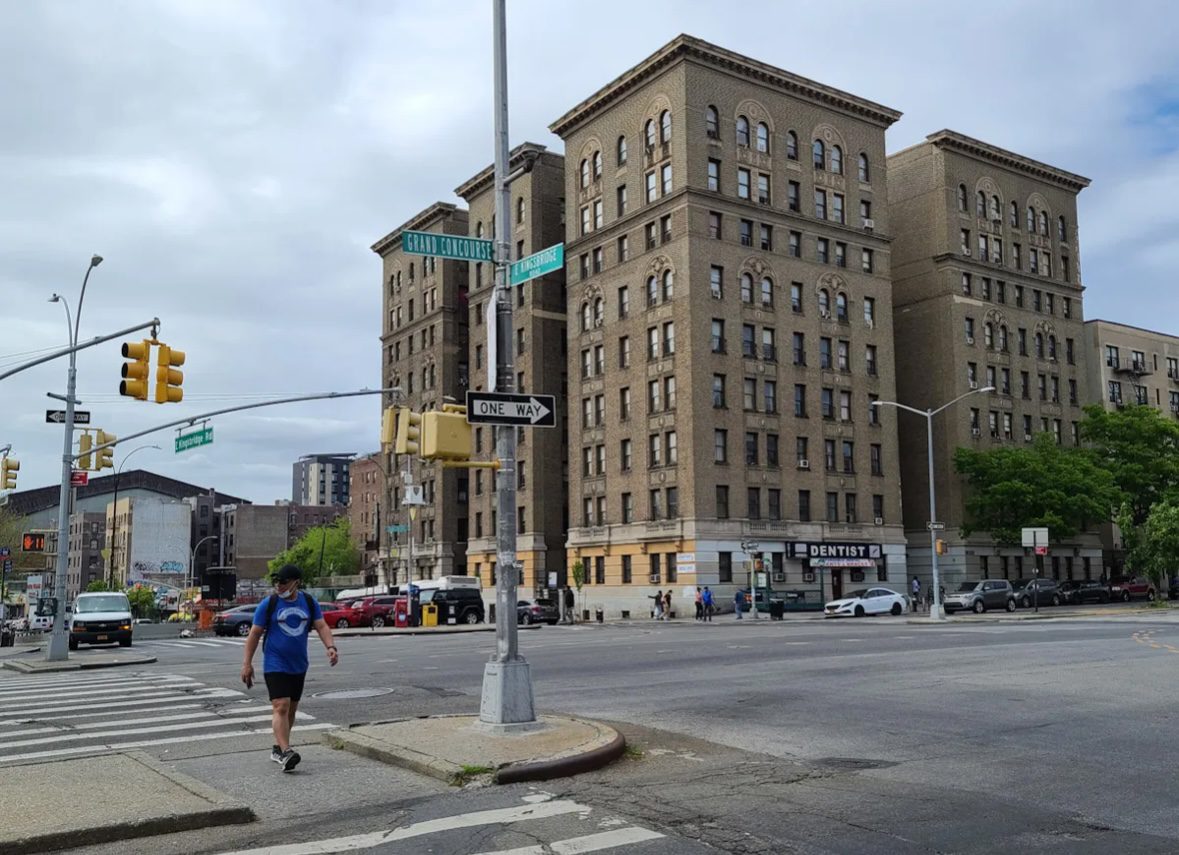
The modern and elegant new buildings were often offered for rent at significantly inflated prices, aspiring to the status of Manhattan’s large residential complexes. For example, the Franz Sigel and Virginia buildings (774 and 780 Grand Concourse) were advertised as “part of Park Avenue moved to the Bronx.”
However, an unofficial rule existed: don’t rent to Black and Puerto Rican families, at least not initially. Even in the 1970s, during the decline of the neighborhood, many families of color faced rejection when trying to rent apartments on the famous boulevard.
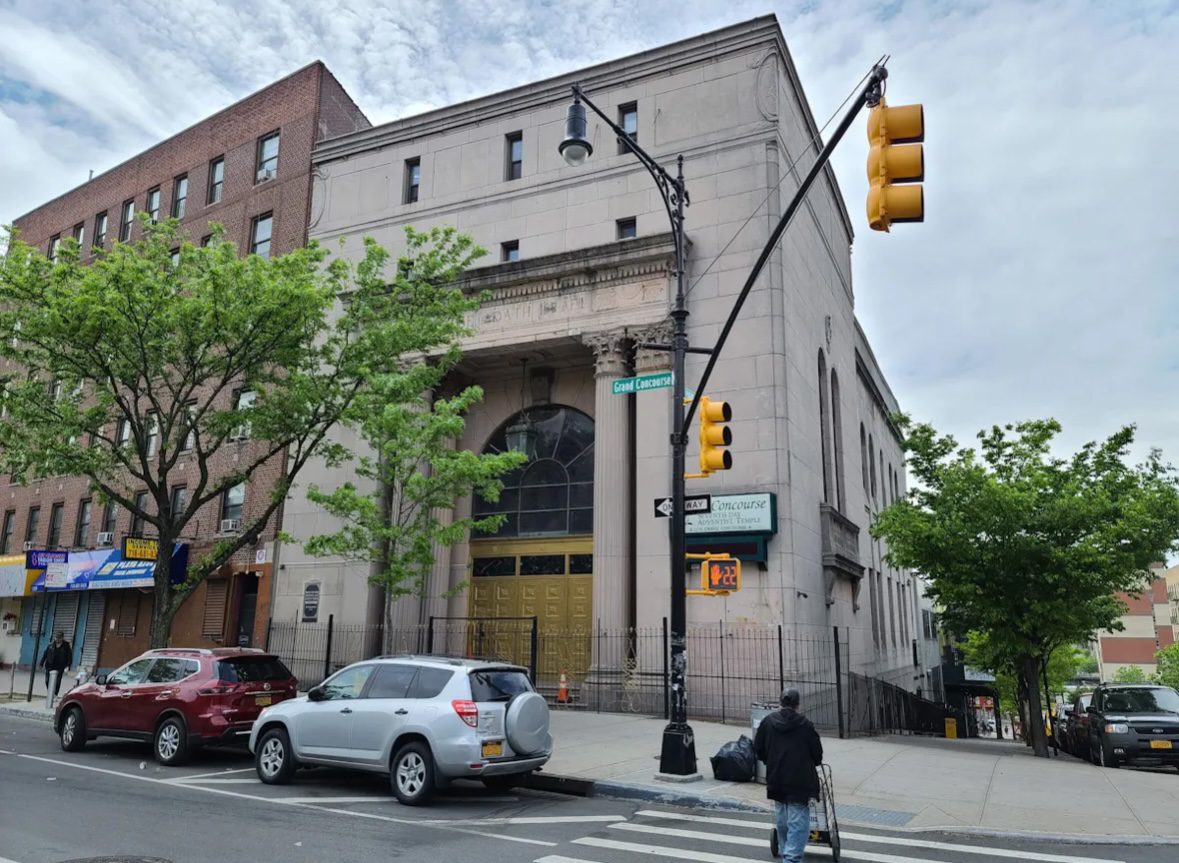
The Turbulent ’70s and ’80s
Starting in the 1960s, the situation in the area began to worsen. In the 1970s, the hallmarks of the South Bronx became abandoned buildings, decaying schools and hospitals, rising crime—much of it drug-related—and numerous fires. During that time, many white families began to leave the South Bronx due to deteriorating living conditions, moving to new neighborhoods like Co-op City or to suburbs that were rapidly developing as a result of this migration.
You can read more about the Co-op City neighborhood, built in the 1960s, in this article.
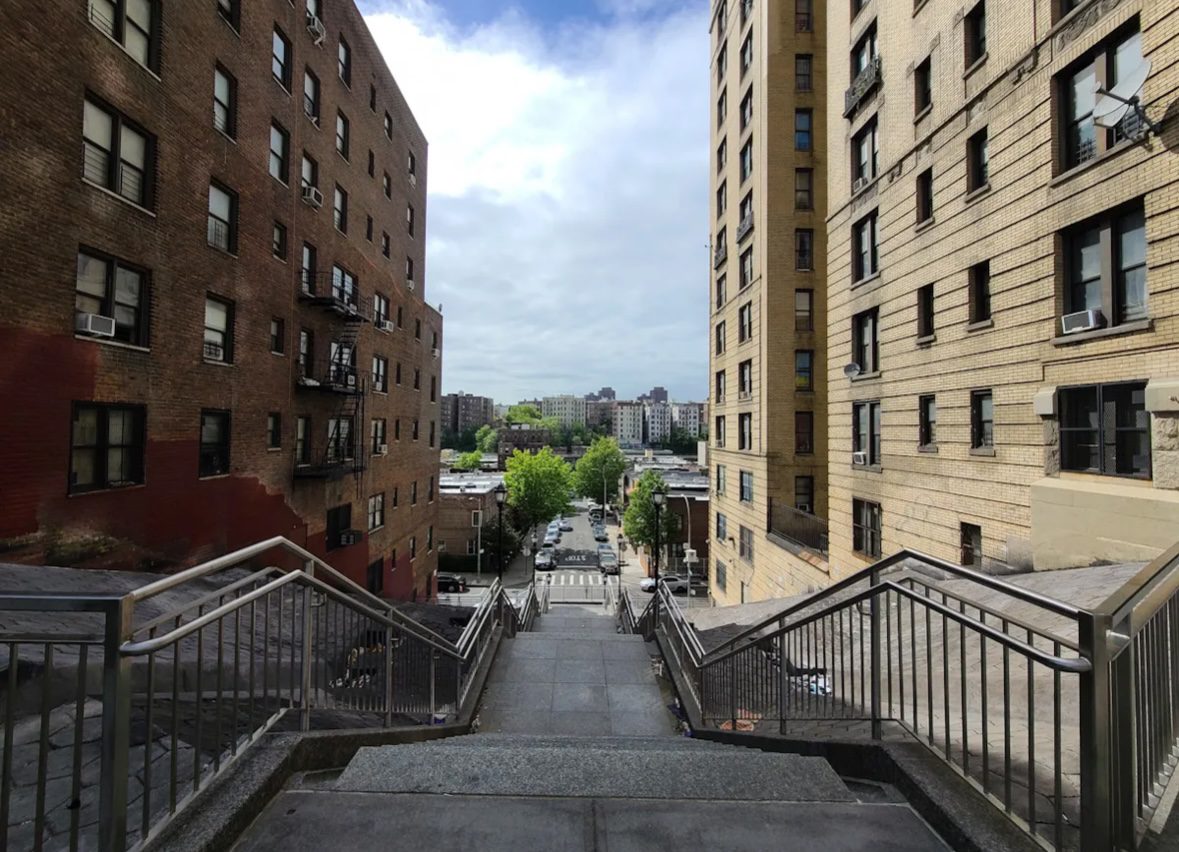
However, despite the worsening conditions from the ’60s to the ’80s, the Grand Concourse remained relatively stable. The fires that devastated other parts of the South Bronx didn’t affect this boulevard.
New York was truly on the verge of economic collapse, and it was felt more acutely in the Bronx than in other boroughs. As the saying went, “When New York gets a cold, the Bronx gets pneumonia.”
Calm After the Storm
But all things pass, and the “dark period” for New Yorkers eventually ended. In the 1990s, a noticeable economic boom was underway, and the Bronx began to develop. Borough President Fernando Ferrer, who grew up in the area himself, understood the hardships everyone faced during the difficult times. He initiated several projects to improve the Bronx’s image, including the “Tour de Bronx.” Of course, the most popular and beloved location for tourists was the Grand Concourse.
In 2011, a certain section of the famous boulevard, where landmarks are concentrated, was recognized as a historic district by the New York City Landmarks Preservation Commission.
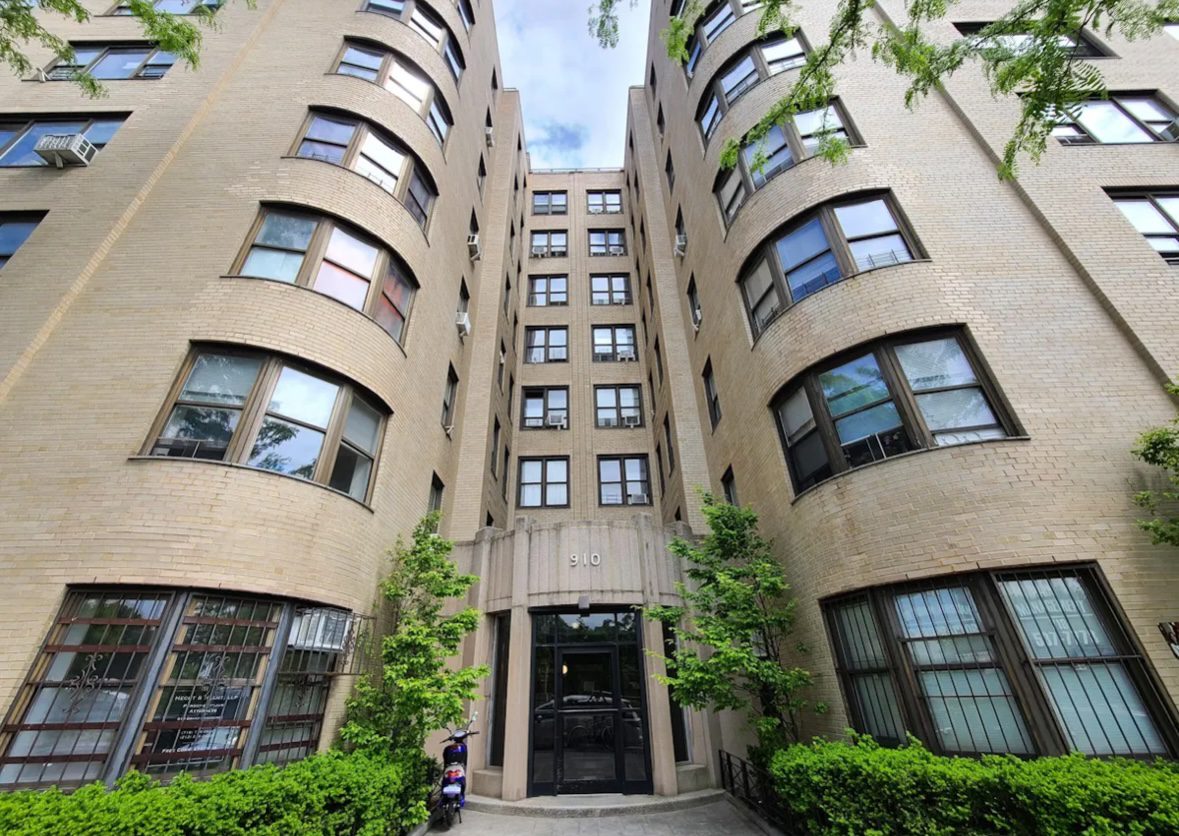
Today, the Grand Concourse is much more racially and ethnically tolerant. It now reflects the diversity of the Bronx’s population: Puerto Ricans, Dominicans, Mexicans, African Americans, Muslims, Christians, and Jews all live here together.
Interest in the Grand Concourse is growing, and more and more people are buying apartments here, which is contributing to the rapid revitalization of the area. Even though real estate prices have increased by 68% since 2014, apartments here are always in demand.
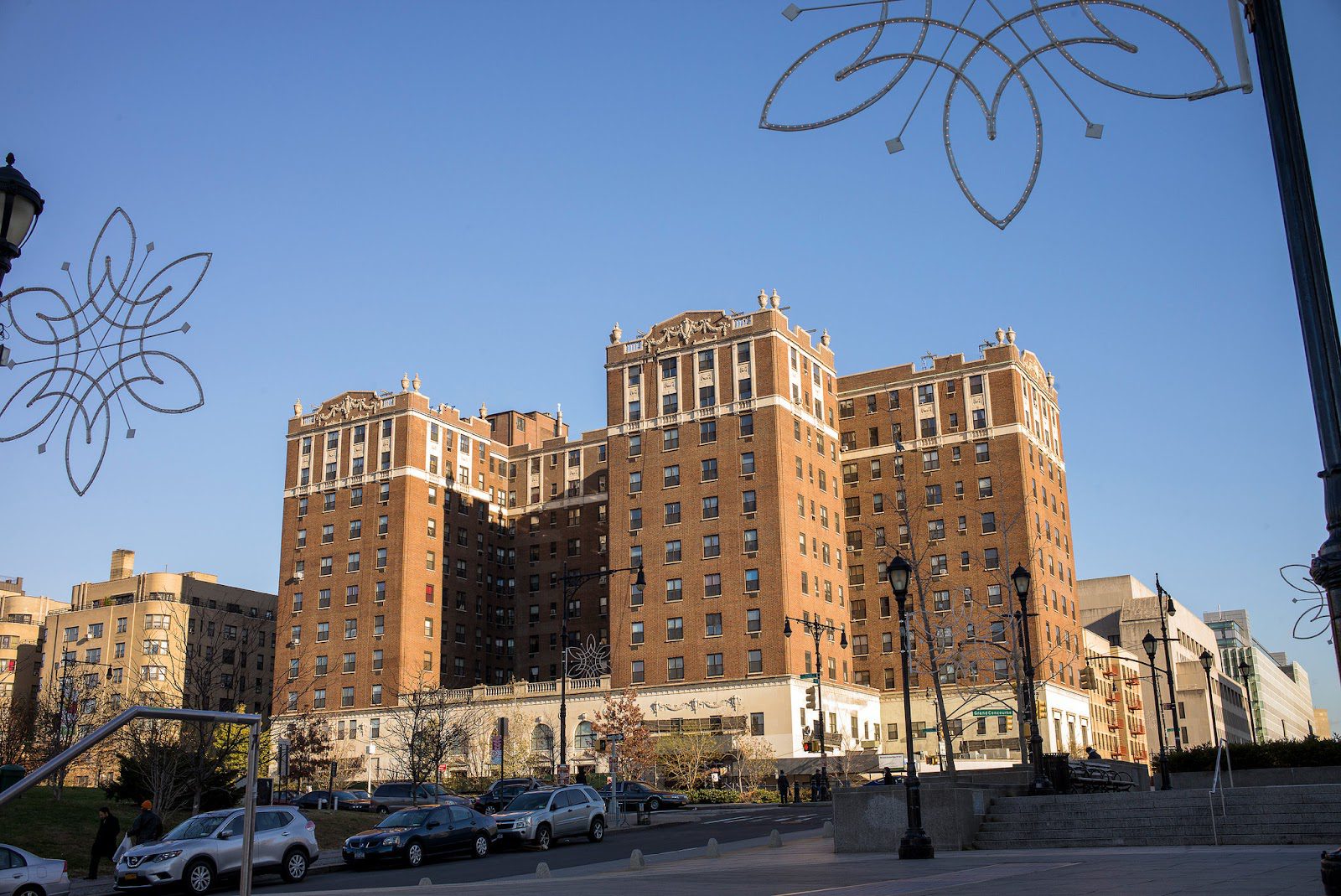
The Grand Concourse is compared to Ocean Drive in Miami Beach for its architectural styles and to the Champs-Élysées in Paris for its magnificent proportions. It’s no wonder that Bronx writers such as E.L. Doctorow and Jerome Charyn immortalized this boulevard in their works.
100 Years of History in One Exhibition
To celebrate the Grand Concourse’s centennial, the Bronx Museum of Art organized a major three-part exhibition. The first part was dedicated to the boulevard’s history, the second to its present, and the third to its future. In the first large exhibition, which symbolized the past of the Grand Concourse, visitors had the opportunity to view artworks, architectural drawings, prints, photographs, and other artifacts.
One valuable and rare exhibit was a series of eight black-and-white photographs by an unknown author, taken at the dedication of the Heinrich Heine Monument in 1899. This monument, also known as the Lorelei Fountain, honors the German Romantic poet who died in 1856. It was originally planned for Düsseldorf, but due to anti-Semitism, the monument was moved to the Bronx thanks to the efforts of German-American residents of New York.
The exhibition also featured the famous Diane Arbus photograph “Jewish Giant at Home with His Parents in the Bronx,” which shows Eddie Carmel, who grew to 8 feet 9 inches due to a medical condition, with his parents. And everyone was impressed by Skowmon Hastanan’s work—a series of colorful vinyl tiles with quotes and stories about the decline and revival of the Bronx.
The exhibition dedicated to the present showcased the current state of the Grand Concourse, as well as current projects and innovations related to this legendary street.
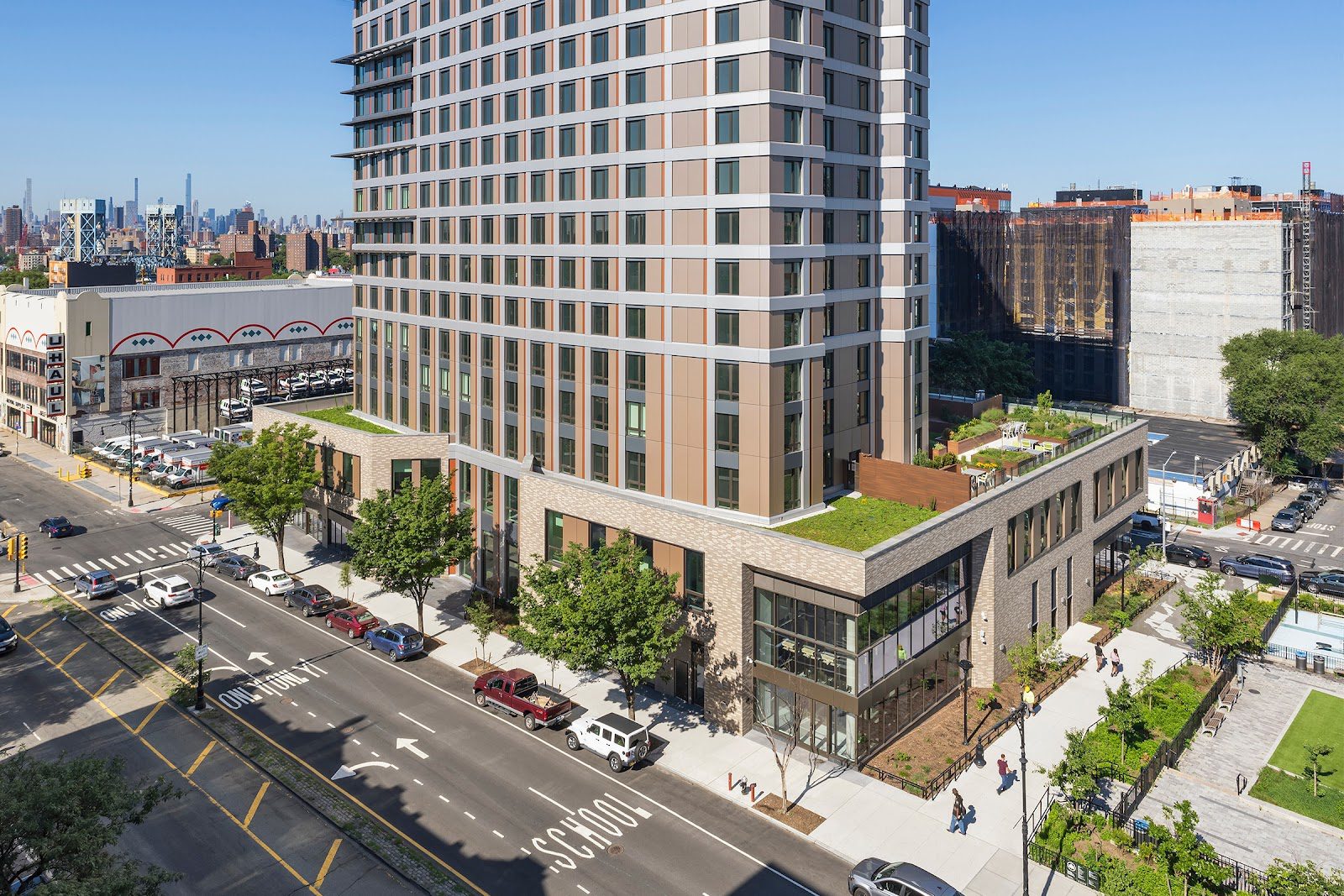
The final section presented seven projects that reflected a vision for the future of the Grand Concourse. They were selected as part of an international architectural competition co-organized by the museum and the Design Trust for Public Space.