

New York City is one of the largest and arguably the most famous cities in the world, and the Bronx is one of its most iconic boroughs. While relatively young, the Bronx began to experience rapid development after World War I. During this period, the population surged from 200,000 in 1900 to 1.3 million by 1930. Although the Great Depression and World War II slowed its growth, the 1930s marked the construction of the Bronx County Courthouse, a central hub for municipal services and judicial proceedings. This article from brooklyn-future.com dives into the history and architecture of this remarkable building.
The Reasons Behind the Bronx County Courthouse Project
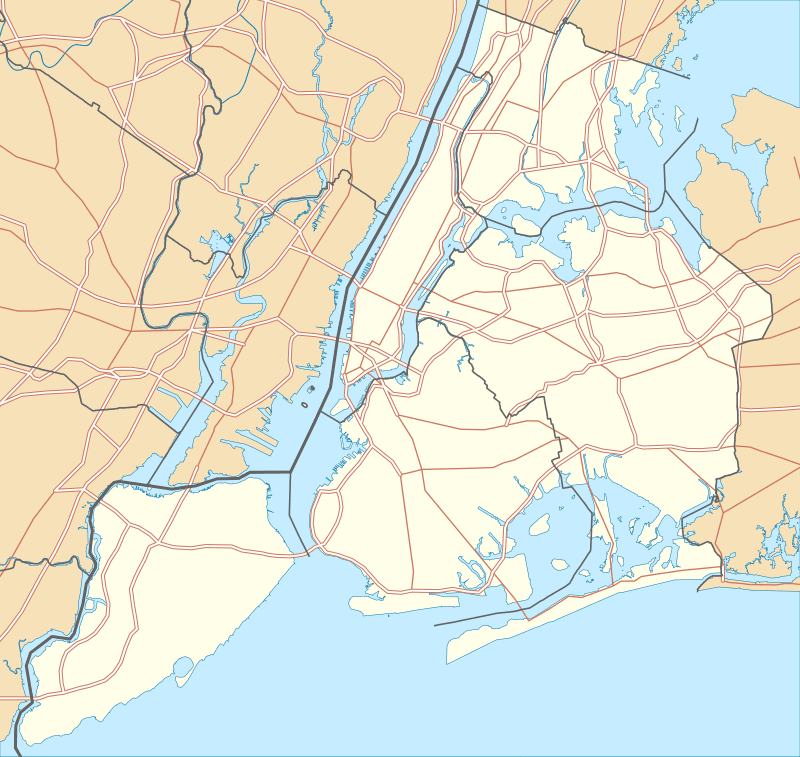
As researcher Ultan Lloyd highlights, the Bronx in the 1920s was a destination for many. Thousands of people migrated from Manhattan to new apartment complexes with modern amenities via freshly built subway lines. By the mid-1920s, the Bronx had become one of New York City’s fastest-growing boroughs, with its population exceeding 1 million.
However, this rapid development created a need for improved municipal services. By the late 1920s, various offices, including the surrogate’s office, public administrator, county clerk, district attorney, and borough president, were scattered across the Bronx. Residents faced significant challenges coordinating visits to these dispersed locations. Centralizing these offices promised not only improved efficiency and cost savings but also greater convenience for citizens. Additionally, the growing number of civil and criminal cases demanded new courthouse facilities.
Designing the Bronx County Courthouse
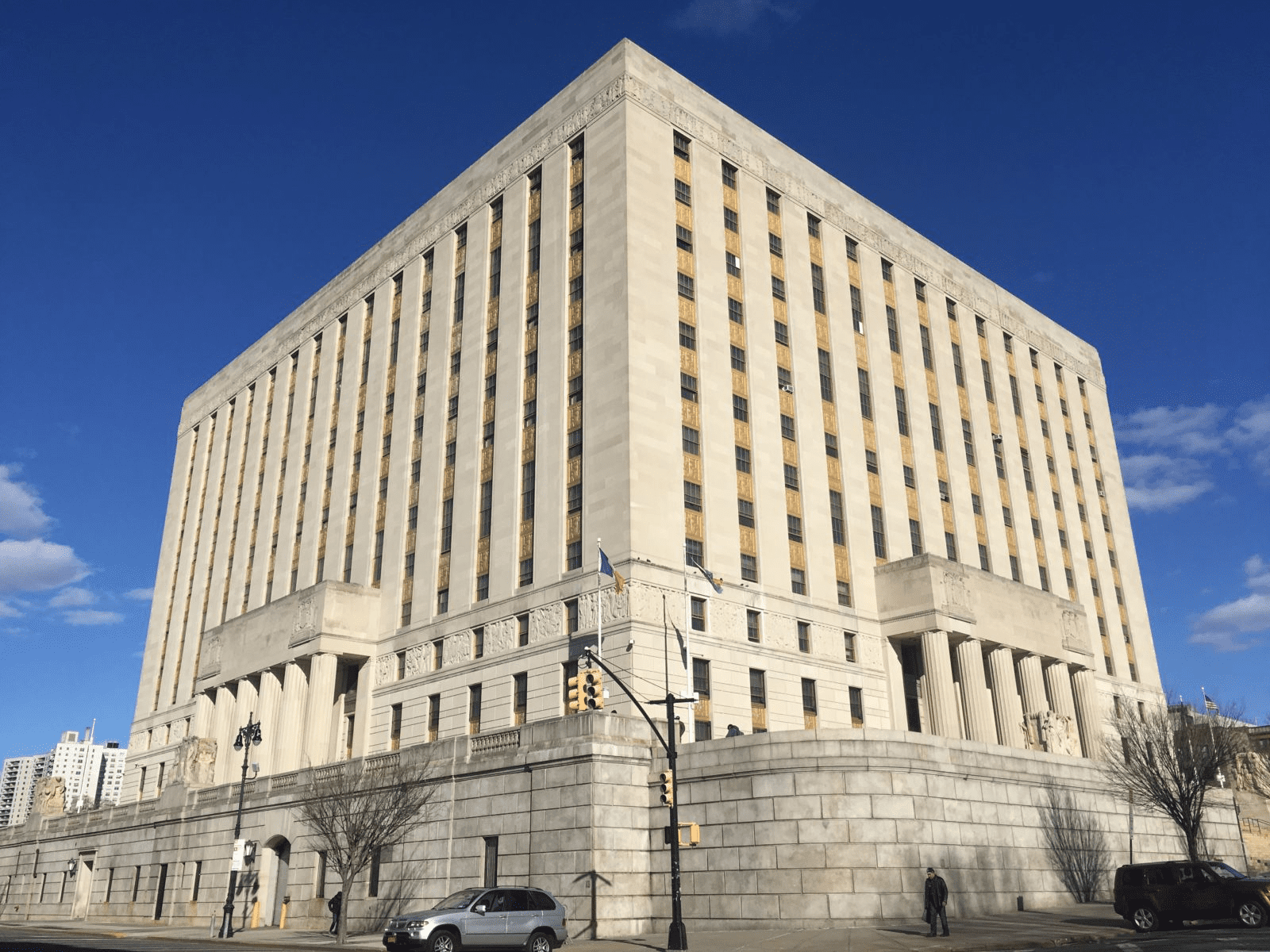
Planners envisioned a monumental, practical, and aesthetically pleasing building. Proposals ranged from a skyscraper design to a structure resembling a Greek temple. Ultimately, architects combined these ideas into a cohesive design for a government center. In 1928, land for the courthouse was secured, bounded by 161st Street, Walton Avenue, 158th Street, and Mott Avenue.
The Architects
Two architects were chosen for the project:
- Joseph Friedlander, a New York City native born in 1870, studied at the Massachusetts Institute of Technology and the École des Beaux-Arts in Paris. He was known for designing the Museum of the City of New York in Manhattan and the Andrew Freedman Home in the Bronx.
- Max Hausle, born in Switzerland in 1879, also brought significant expertise. Before the courthouse, he had designed several other courthouse buildings in the Bronx, all in a classical style.
Exterior Design
The Bronx County Courthouse stands 20 stories tall, towering above the surrounding five- and six-story residential buildings. It sits on a rusticated granite base, giving it an even more imposing appearance. The facade is clad in limestone, with vertical windows separated by limestone panels. Decorative elements include copper and nickel spires in Art Deco patterns, and fasces—a Roman symbol of authority and power—adorn the upper sections of the building.
The entrances feature classical columned porticoes, enhancing the courthouse’s monumental appearance.
Interior Design
Both the exterior and interior of the courthouse were adorned with works of art. Sculptural figures designed by Adolf Weinman surround the entrances, which are flanked by massive pink granite blocks. Other sculptures depict allegorical themes of patriotism, justice, and valor.
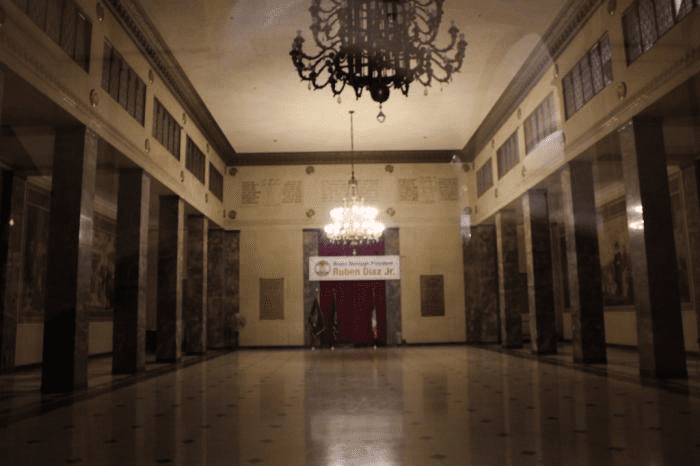
The building’s layout resembles a hollow square, with large frosted windows on the upper floors providing light and ventilation to public spaces. A notable feature on the main floor is the Veterans Memorial Room, a grand space adorned with metal plaques inscribed with quotes from American presidents, particularly those who led during wartime. Above the northern and southern entrances, quotes from President Woodrow Wilson, who led the nation during World War I, are embedded in white stone.
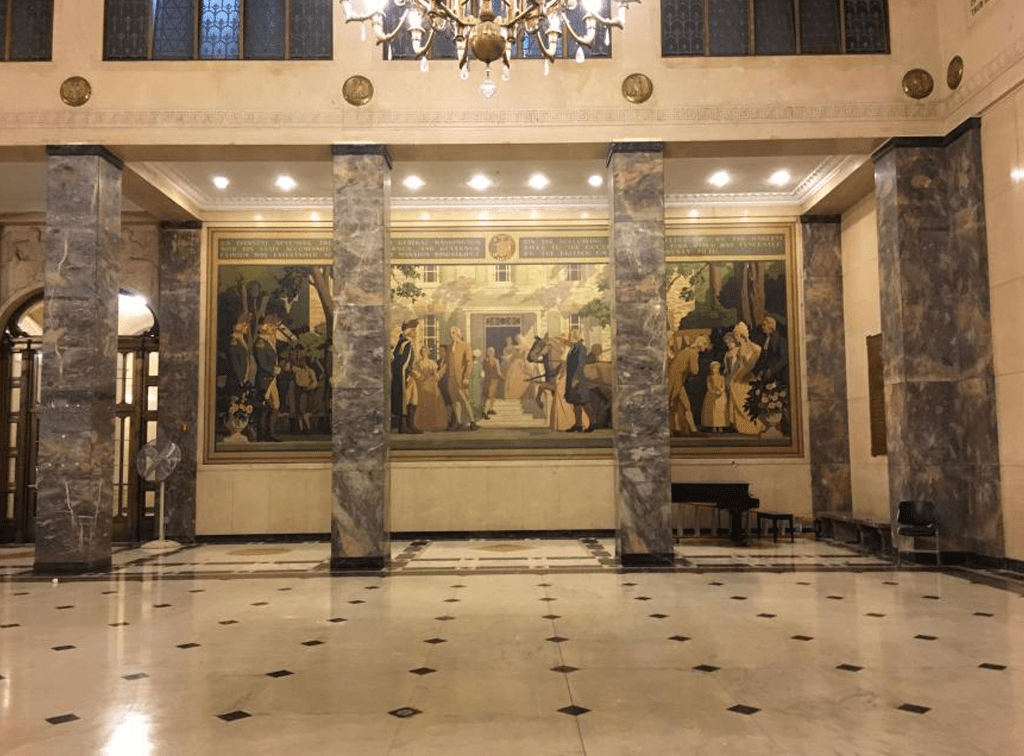
The room also features four large murals, each 10 by 36 feet, created by James Monroe Hewlett. These murals depict key historical events connected to the Bronx:
- The arrival of Jonas Bronck in 1639 in what is now Mott Haven.
- The first session of the Westchester County Court in 1764 at what is now Westchester Square.
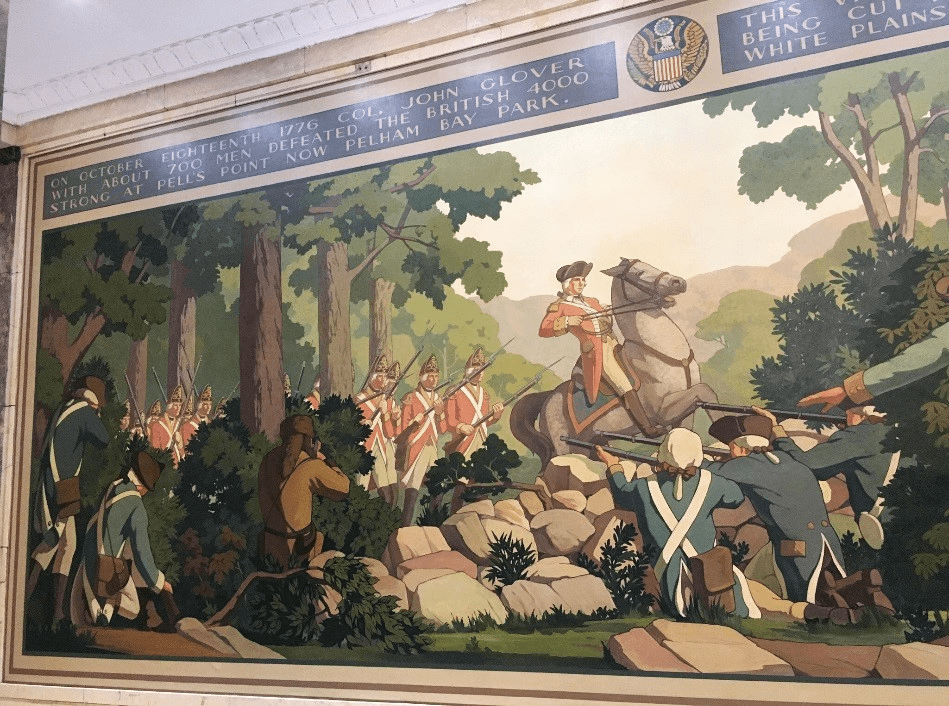
- The Battle of Pell’s Point on October 18, 1776, at today’s Pelham Bay Park.
- President George Washington’s journey from Van Cortlandt House in November 1783 to Van Cortlandt Park.
Construction and Reception
Construction of the courthouse began in 1931, with the cornerstone laid in 1932. The building was completed in just two years, with some interior work continuing into 1934. During this period, offices slated to occupy the building relocated to their new premises.
Public reception of the courthouse was overwhelmingly positive. Mayor Fiorello La Guardia remarked that the city’s $8 million investment had produced a building reminiscent of “the palaces of my ancestors—Justinian, Augustus Caesar, and Nero.” Judge Joseph M. Callaghan of the Special Supreme Court praised the building’s beauty, simplicity, and traditional American style. The New York Herald Tribune called it a prime example of 20th-century American architecture, blending neoclassicism with modernism.
Conclusion
The Bronx County Courthouse, completed in 1934, stands as a testament to functional design and artistic excellence. With its carefully planned layout and stunning decor, the building continues to serve as a cornerstone of Bronx history and civic life.